KELS · 20.15 · Elsewhere · essay ·
Both Sides of the Page
A dervish on gold leaf from the Grand Bazaar, the handwriting he was painted over, and the teacher who was both things at once.
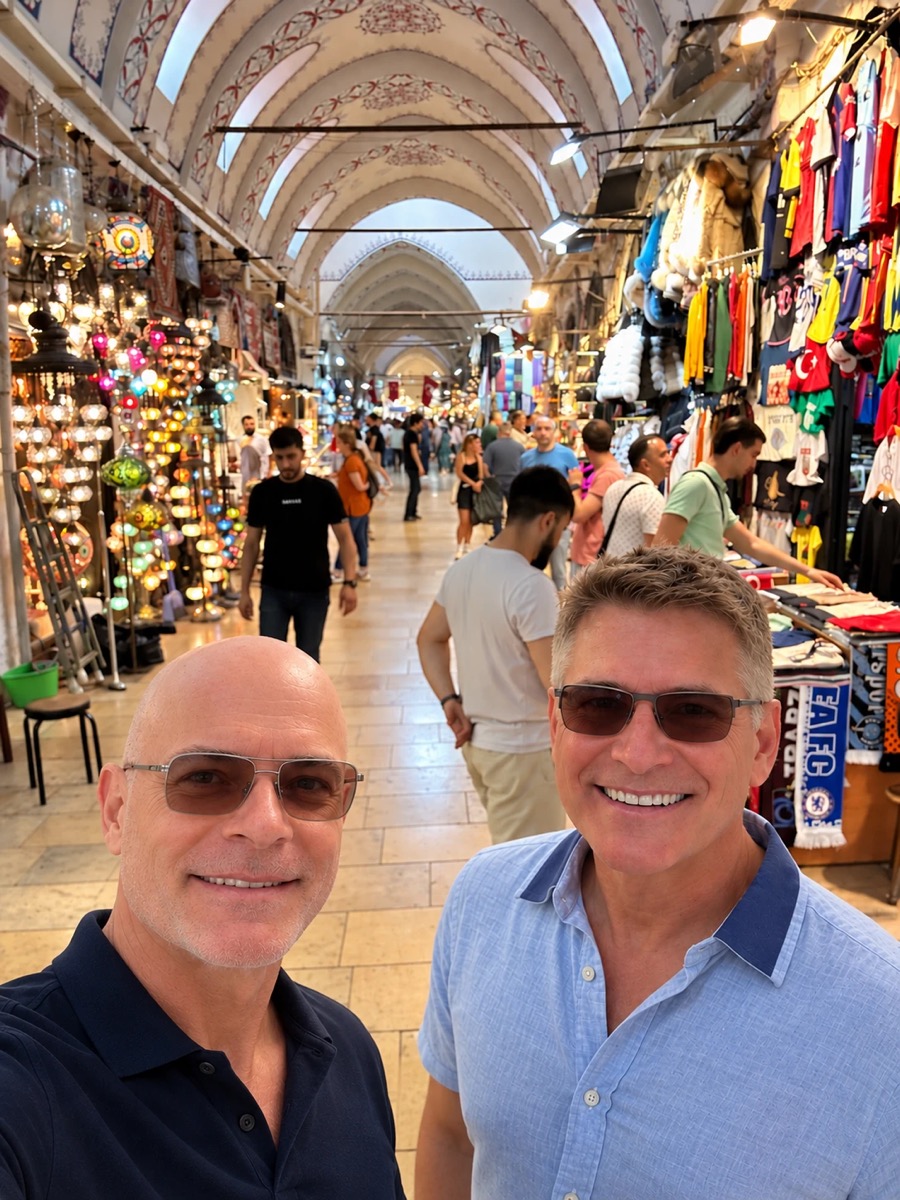
The Grand Bazaar in Istanbul has been selling things since 1461, and one of the things it sells is old paper. Past the carpets and the lamps and the men who will tell you the price of anything, there are stalls of small paintings: horsemen, tulips, a boat on the Bosphorus, a line of calligraphy, and each one is painted on a page torn from a book that was old before the painter was born. I did not know that going in. The bookseller told me, and the age of the paper turned out to be part of the point. In July 2023 I bought one, and I have been turning him over ever since. He is a whirling dervish painted on the front of a page of law, and this is about the two sides of that page, the letting-go and the rules, and the teacher who first showed me that one person can be both at once.
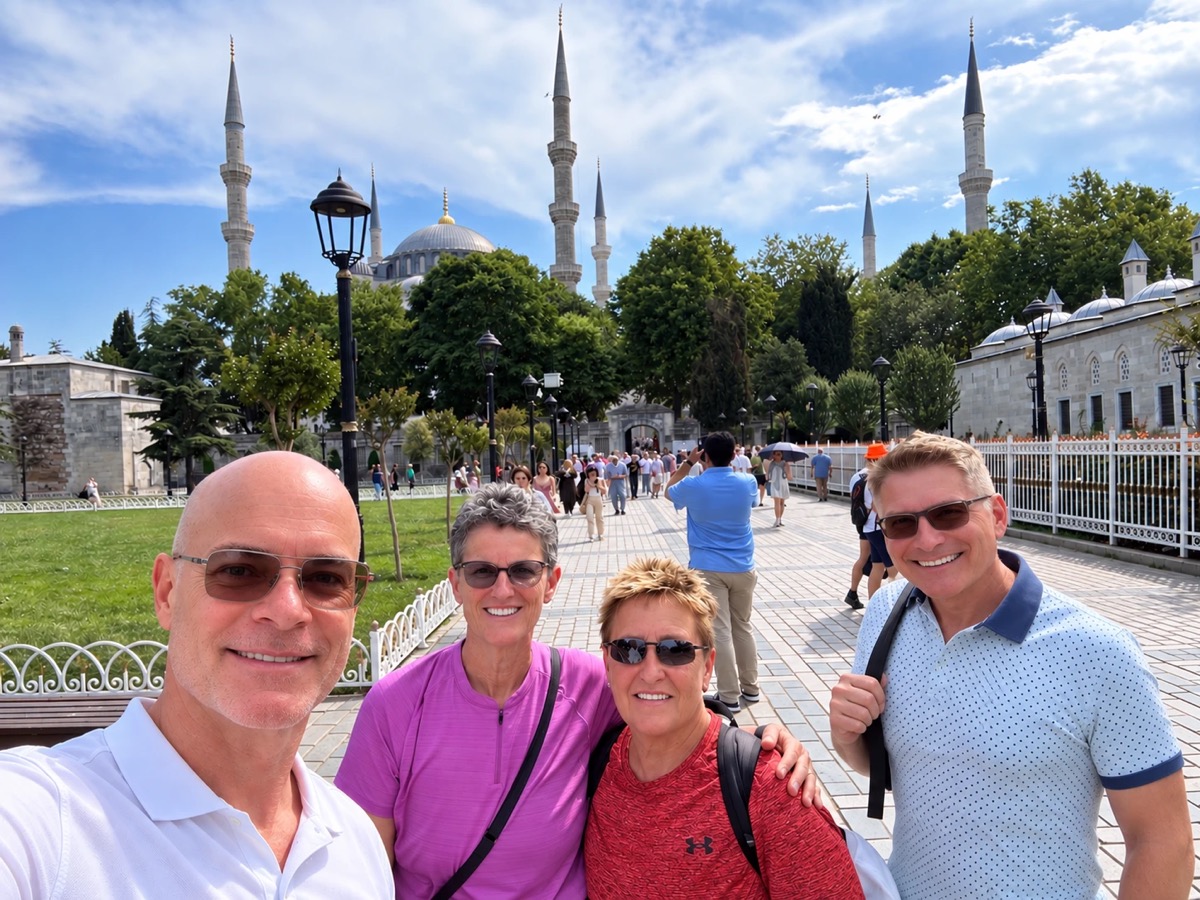
We came to Istanbul by ship. Aldo and I were on a cruise from Athens to Venice in July 2023, and on the Friday the ship came up from the south, across the Sea of Marmara, with the old city sliding past on the left, mosque after mosque, and a historian on board naming each one over the loudspeakers as we went, and tied up at the mouth of the Bosphorus for the night, which is the way to arrive. Istanbul is beautiful. We had a day and a half in it and used all of it: the mosques, the streets, the food, everything we could taste, the energy of a city that has been a crossroads for fifteen hundred years and still acts like one. We loved it. And then, back on board that night, the city kept going. From the deck we could hear music from all over it, and yachts full of stylish people and parties went past the ship all night long.
The bookseller was a gentle man. We started talking at the front of the shop, and after a while he offered to make tea. Aldo went off to shop some more, and the two of us went into the back and sat. He was a devout Muslim, and he told me about the peace of Islam, the way a person tells you about something that has held him up for a long time, and I listened. It was a wonderful experience, the quiet at the back of a shop in the middle of the Grand Bazaar with a man who was in no hurry. When Aldo came back I bought the dervish. The talk came first and had nothing to do with the sale. The bookseller was, as I said at the time, so sweet and gentle and thoughtful.
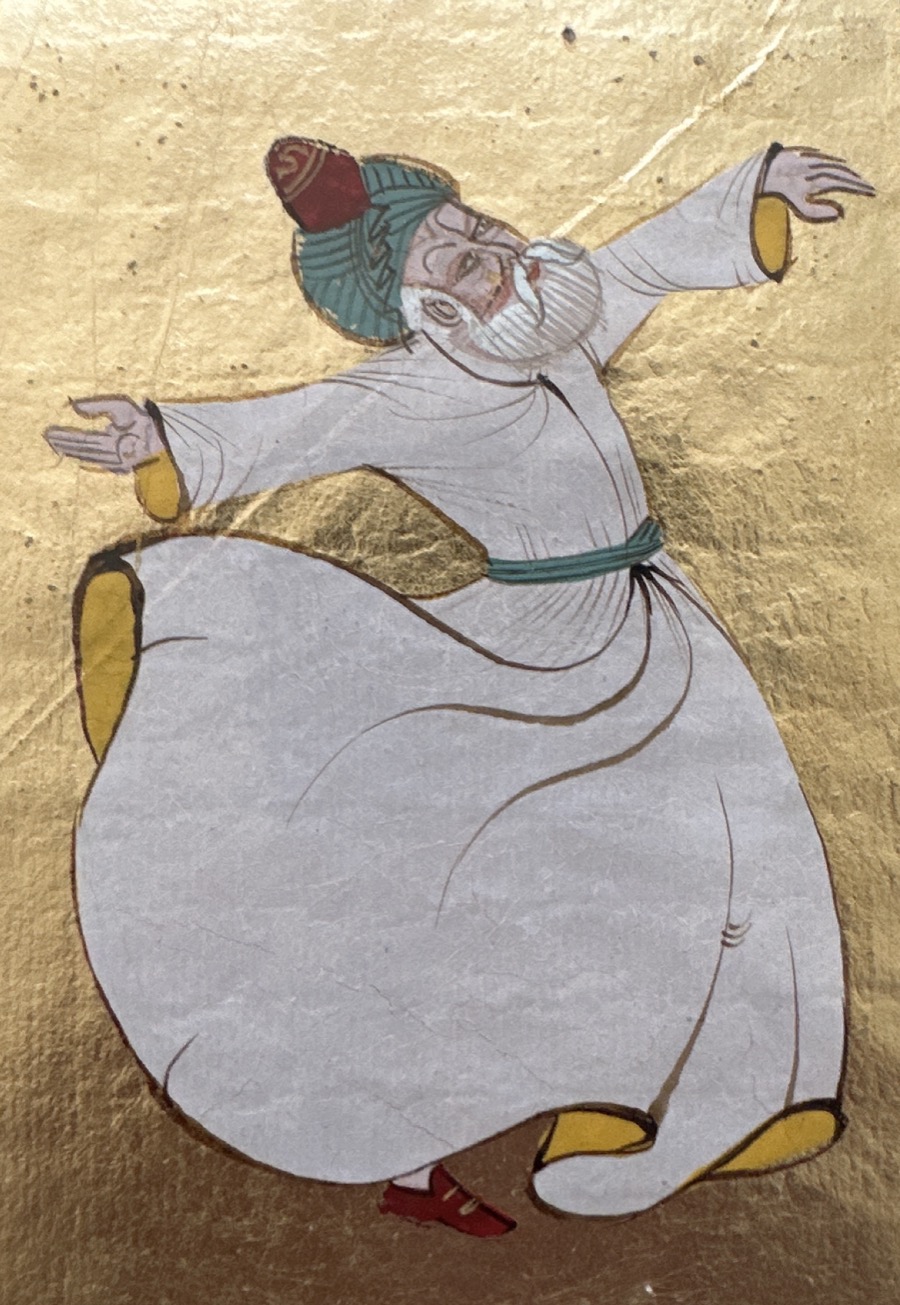
The man in the painting is a whirling dervish: an old man with a white beard, in the white robe of the order, a green turban wound around his red cap. The robe has flared into the bell it makes at speed. One hand is high and one is low, which is the posture: the raised hand receives, the lowered hand passes it along, and the man between them keeps nothing. He is on gold, and the gold is creased and rubbed the way leaf gets when a page has been folded and opened for a long time. His shoes are red. The painter gave him a face that has been doing this for years and is not tired of it.
Turn him over and there is the other thing. The back of the page is handwriting, fifteen lines of Arabic script in black ink, with a few words picked out in red and a note in the margin in a smaller hand, the way a reader adds a note. A fold runs across it, the same fold that crosses the robe on the other side. I cannot read it. From the photograph, with help, I can make out the words for seed, and land, and partnership, and contract, and I think it is a page of law: a jurist working through the crop-sharing contract, who supplies the field, who supplies the seed, who takes the loss when the seed is lost in the ground. Nobody who reads Arabic has checked that for me, so hold it loosely. The dervish was painted on top of a page about who owes what.
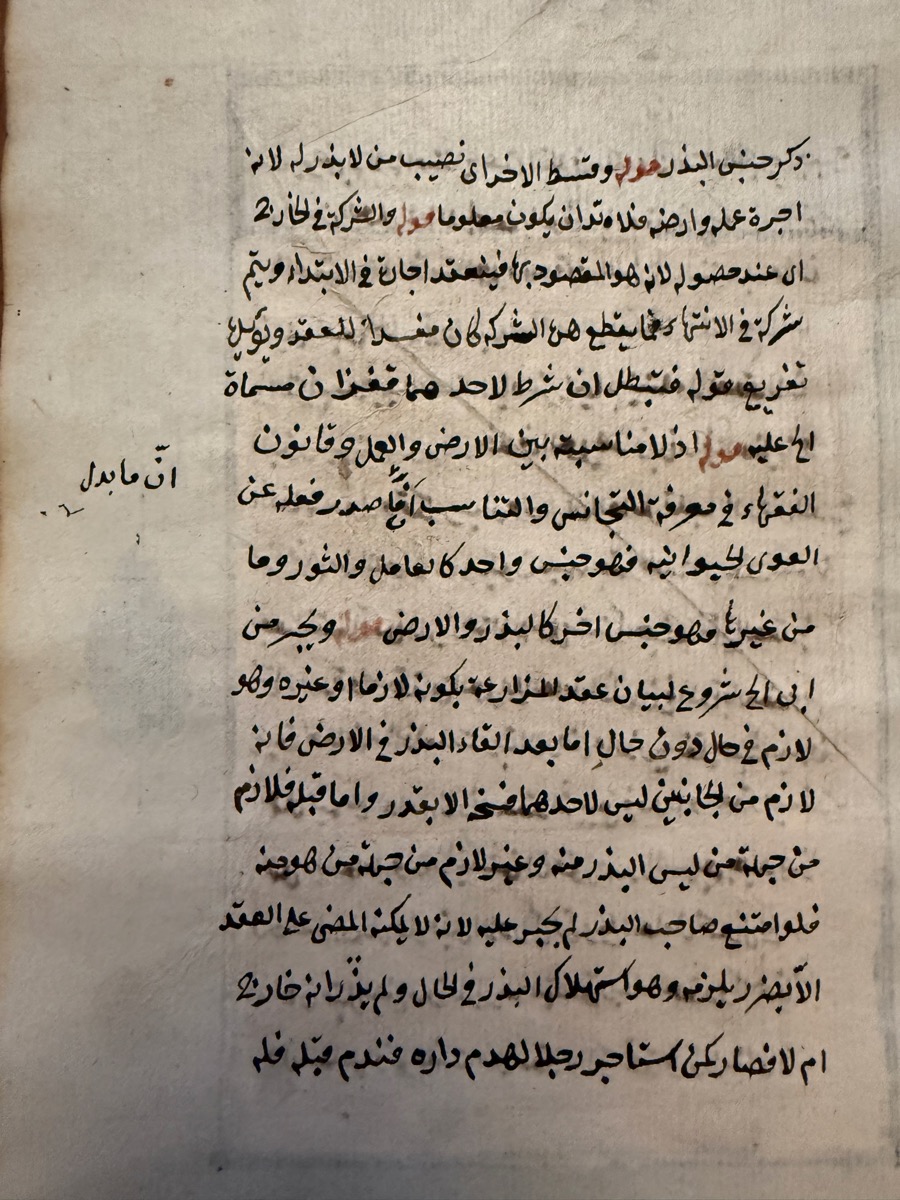
When I first showed him around I called the page a palimpsest, and the word is wrong in the strict sense. A palimpsest is a sheet that was scraped clean and written over, so the first text survives as a ghost under the second. Nobody scraped this one. The law is still there, in full, on the back. The dervish is on the front. The two have shared one sheet for as long as they have, and neither has given anything up. I do not have a word for that. Layers is close.
Ray
I had met the two sides of the page before, in one person, on a lawn. In my college years at the University of Minnesota I came across a group doing Tai Chi on the big lawn by the river on the East Bank, the kind of nice day that pulls people outdoors, and I stopped, and then I joined. They were Twin Cities T'ai Chi Ch'uan, and the man running it was Ray Hayward. He was my first teacher. He was a Taoist and he was a Sufi, both at once, and he did not seem to feel any strain in holding the two. He gave off peace and knowledge and compassion in equal measure, and he gave them the way the dervish gives, with one hand receiving and the other passing along. I have had good teachers since: Paul Abdella after him in Minnesota, and Martin Inn and Terry Li in California. He was the first, and he set the shape.
So when I found a dervish on gold in a bazaar thirty-odd years later I did not need anyone to explain him to me. Ray had already done that on the lawn, without saying a word about it, by being both.
The Field
On December 22, 2024, my birthday, I posted him. Five days earlier, in Konya, the Mevlevi had finished the ten nights of Şeb-i Arus, the wedding night, the anniversary of Rumi's death on December 17, 1273, which the order keeps as a wedding because he asked them to. I didn't plan that, but liked it when I noticed.
Then I made a banner from him, a wide image with minarets and a figure turning inside a spiral of light, and I put a sentence across it: Think of consciousness like space-time, a fundamental, omnipresent field. That was what I believed, and had believed for years. Consciousness was in everything, the way space is, and the dervish was the picture of a man who had stopped fighting it and let it turn him.

On June 4, 2026, I took the sentence down and put up a different one, about structures, and the dervish came down with it. I had not stopped being a panpsychist. I had come to think that systems do what they are structured to do, and that the field I had been imagining was a structure I had not yet described. That is a story for another station.
What did not come down was the turn. Meditation since seventh grade, Tai Chi on a lawn and every place since, Sunday nights under headphones, a motorik beat that refuses to change, a man in a white robe going around and around: it is one maneuver in different clothes. Hold the input steady until the model of yourself goes quiet. The sentence at the top of the banner changed. The man under it was doing the same thing he had been doing all along, and Ray had been doing it on the East Bank before I owned a single page.
The sheet has the law on one side and the letting-go on the other, and the fold runs through both. That is the page, and that was the teacher, and on a good day it is me.
Sources: the painting, front and back, photographed in December 2024. The Atlantis Athens-to-Venice cruise on the Oceania Vista, July 5 to 15, 2023, was in Istanbul overnight from Friday July 7 to Saturday July 8. The Grand Bazaar opened in 1461 under Mehmed II. Şeb-i Arus is observed in Konya on December 17, the anniversary of Rumi's death in 1273, with ceremonies in the days before it. The reading of the page on the back is a guess from the photograph and has not been checked by a reader of Arabic.
Related: Three Times, the other place on this station where a feeling arrived without a plan.